
The Limits to Growth+50
2022 marked the 50th anniversary of the Club of Rome’s landmark report, ‘The Limits to Growth’. This report – first published on 2 March 1972 – was the first to model our planet’s interconnected systems and to make clear that if growth trends in population, industrialisation, resource use and pollution continued unchanged, we would reach and then overshoot the carrying capacity of the Earth at some point in the next one hundred years.
Some fifty years on, the call for a change in direction was more urgent than ever. The report’s modelling was remarkably accurate and prescient as the world declares the climate emergency to be real and global ecosystems to be at breaking point. Fifty years offered an excellent opportunity to look back, and forward, at the trends it examined and listen to leading international thought leaders, scientists and politicians on how we create a new critical framework for living and thriving within the limits on Planet Earth.




Related Opinions

All we need is futures resilience – The Limits to Growth revisited
06 September 2023 - Humanity’s clock is ticking painfully loud. As never before in the history of human beings, today we face existential risks including the potential of human extinction. Two such risks stand tall: Climate Change and Artificial Intelligence (AI) with...
How to change the paradigm: What we learned from investigating the story of The Limits to Growth
25 July 2023 - Several years ago Vegard Beyer and I met at a summer school organised by The Club of Rome. That is where we first learned about the landmark study it had commissioned: 1972’s The Limits to Growth. The report warned that unfettered economic growth could...
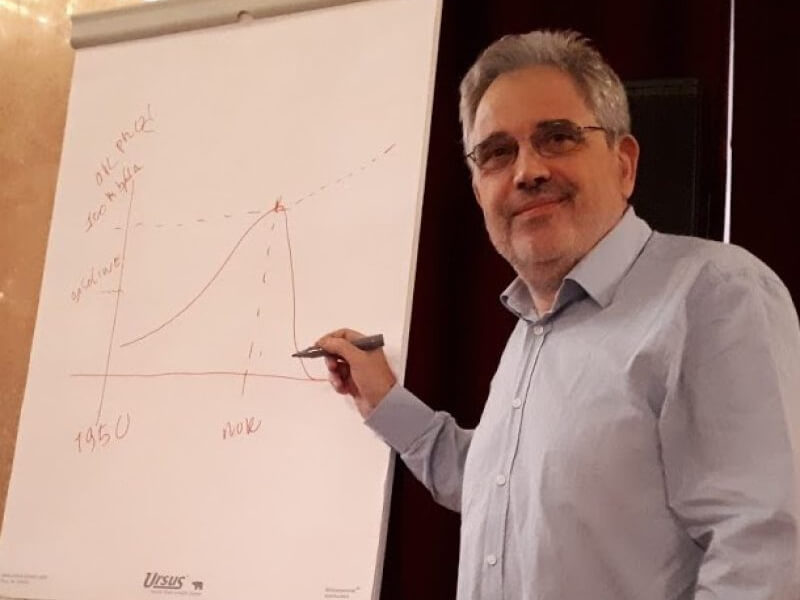
Redefining collapse: Q&A with Ugo Bardi
22 June 2023 - In our first instalment of the Q&A series with authors of the Limits and Beyond, we talked to Ugo Bardi, the co-editor of the book, a member of the Club of Rome and a professor at the University of Florence. Bardi touches on the legacy of The Limits...

Why systemic change is essential for a sustainable future
31 May 2023 - Fifty years have passed since The Club of Rome published The Limits to Growth. The report was a sharp critique of the notion of material growth as eternal and predicted increasing problems as a consequence of rapidly growing populations and economies....

Economic growth on a finite planet? Earth4All and the GDP debate
21 September 2022 - Despite its dominance as an indicator of progress, GDP was never intended to measure a society’s overall health. Rather, it was intended to measure society’s economic activity level in monetary terms - as the value of the total output of goods and...

Achieving Earth for All
14 July 2022 - Because the changes needed to achieve sustainable well-being for everyone are so big, they require determined social movements with wide participation. But while history shows that inertia and defeatism can become self-fulfilling, it also shows that...

From The Limits to Growth to Regeneration 2030
07 June 2022 - Fifty years ago, Italian business leaders in the Club of Rome gave a jolt to the world in their path-breaking report The Limits to Growth. That thought leadership continues today as Italian business leaders launch Regeneration 2030, a powerful call for...

Eco-infrastructure – A transformational opportunity for investors
30 May 2022 - Fifty years ago, a team of MIT scientists identified that human decision-making was luring our entire population slowly but inexorably toward environmental disaster. Through the first ever computer model of the world, they showed that the relentless...

What a 50-year-old world model tells us about a way forward today
17 May 2022 - My research went viral last summer. I found out via a friend’s text, jokingly accusing me of “announcing the end of the world.” For several days, headlines on major US news pages declared that my research proved we are on the brink of collapse. A few...

Living within the limits
11 March 2022 - The 1972 book, Limits to Growth, warned that the Earth’s resources would not be able to support the exponential rates of economic and population growth and would collapse before the end of this century. Alongside numerous other initiatives at the time,...